Orkut: A case study in culture and technology


One of things I love the most about the internet and social media is the ability to stay connected to people around the world. In school year 2021-2022, we hosted two foreign exchange students – one from Italy, one from France. Months before they arrived, we were able to Zoom with them and get to know them a little, and vice versa.

Once they were the States, they could easily keep up with friends and family overseas, and we were able to start a Vincent Family Instagram (it’s just as popular in Europe) group through its messaging function that we continue to use today, even though they’ve been back in their home countries for two years now. As social media platforms have grown, while each may have its own unique features, they are all dedicated to meeting the needs of their customers all across the globe. It only makes sense that online business, whose venue is literally the World Wide Web, would make this a priority and take the cultural backgrounds of their audiences into consideration while doing it. But not all brands, apps, and sites are able to accommodate and support global users.

The best laid plans…

Orkut, a social networking site developed by Google employee Orkut Buyukkokten, debuted in 2004. With the support of Google as well as a solid techological foundation and action plan, it started strong and within 10 years had “over 300 million registered users.” (Priyanka, 2023) Several factors contributed to its success, such as:

  • providing users with a more participatory role
  • communities based on interests
  • sleek design
  • invite-only membership
  • a competitive rating system

Early on, tech students and workers made up the largest group of users. They were able to connect with people at all levels in the tech world, not only friends and colleagues, but also leaders in the industry. And with the platform membership’s exclusivity, “being part of the social networking site meant that you were well connected in the technology realm.”

As Orkut’s popularity grew, it’s largest customer base changed from this niche group to the population of Brazil, “where cell phones outnumber people.” One of the reasons for the change is that it offered the residents of the country a new way to market their businesses online, which was attractive since outdoor marketing was banned. It proved so popular that by 2014, “90% of page views in Orkut (were) accessed by by users in Brazil.”

…Sometimes go wonky

Despite it’s popularity, Orkut fizzled out after 10 years. One of the primary reasons is that they didn’t consider the need for cultural adaptations. The had a great technological base, but without the ability or willingness to make these changes to meet the needs of their customers, people looked to other emerging social networking sites that could. At the time, they were unable to meet or beat Facebook or even their “in-house competition” Google + when it came to such functions as an increased number of friends allowed, as well as the ability to upload and share images and video. (Gannes, 2014) In short, “in order for brands to be successful in Brazil, they must allow users to blog, engage through social gaming, and incorporate online video into marketing.”


When Orkut first started out, it was difficult to anticipate the extent to which culture would need to be considered as they had a very small global presence. With the more the more advanced technology of today however, it’s important for companies to consider how well they are able to accommodate the dynamic nature of customer bases and their accompanying needs if they want to remain relevant as well as solvent.

(Source of all images: Canva)

Sources Cited:

Gannes, L. (2014, June 30). Flashing Back to 2004 As Orkut Fades Away a Decade Later. Vox. https://www.vox.com/2014/6/30/11628448/flashing-back-to-2004-as-orkut-fades-away-a-decade-later

L Meghan Mahoney, & Tang Tang, (Writer On Social Media. (2017). Strategic social media : from marketing to social change. Wiley Blackwell.

Priyanka. (2023, November 5). Why did Orkut fail? A post-mortem on the rise and fall of the pioneering social network – Tactyqal. Tactyqal. https://www.tactyqal.com/blog/why-did-orkut-fail/

Weixin: A Case Study of Mobile Convenience


As typical Gen Xers, my friends and I were total mall rats when we were teens. We’d meet up on most Saturday mornings, weave in and out of stores – Lerner and Deb for clothes and jewelry, Waldenbooks for the new Jackie Collins novel or that’s month’s issue of Tigerbeat, Spencer for the laughs – for a couple of hours before heading to the food court for lunch and boy-watching.

After some eats, we’d spend another hour or two flipping through albums (vinyls) in the record store or just sitting and chatting, grab movie tickets, jump into the photo booths while waiting for seating, and after the flick, use a pay phone to call our parents to pick us up. It was a microcosm of our suburban sprawl that we could traverse in a day with the freedom we lacked outside of its doors. For us, malls weren’t just for shopping…they were a lifestyle.

A Mall-in-One App

Weixin (WeChat in the States), the China-based multi-function social networking app, debuted in 2011 and by 2014 it had “more than three million active users in China, Southeast Asia, Europe and America.

What made it so successful? A few factors.

First, a great understanding of who their audience was and what they wanted. Namely young urban smartphone users and an all-in-one app. With so many apps to choose from, Weixin made it easy for users by providing them with a mini-operating system within their phones’ larger one. And since 90% of young adults at the time were mobile users, it only made sense to target them.

Second, convenience. With all of the app’s features, it very much reminds me of the mall concept; it certainly offers the same kind of experience. Back in the day, my friends and I may have met at the mall for social reasons, but while we were there, we could search for a new pair of sneakers for gym, buy concert tickets and catch a movie.

Weixin offered its users many of the same types of benefits with the functions it offers, such as:

  • creator profile for personalization
  • messaging
  • picture sharing
  • an in-app browser
  • online shopping
  • cab reserving service
  • seasonal or time-limited functions (such as money dispersal for red envelope day

In addition, the company will often add features to keep up with the times as well as meet the changing wants of needs of their customers.


Third, ease of use. Weixin made the app user-friendly. Instead of typing out Chinese characters on their phone, users were able to use voice to send messages “by simply holding one button and talking.” Users also rarely had to leave the app since it provided so many everyday functions.

Finally, they met their users where they were (on their phones), and worked their way into their daily lives. In the book, Atomic Habits, James Clear discusses how much easier it is to establish new habits by latching them onto old ones. Weixin seemed to understand this concept and were successful in tying their app into their custumers’ habit of using their phones throughout the day.

(L Mahoney & Tang Tang, 2017)

What about US?

According to World Population Review (2023) Weixin (WeChat) has about four million users in the U.S. Of these, “approximately a quarter of all people in the United States between the ages of 18 and 24 use this platform….(and) it is one of the main competitors to other major social media platforms, such as Facebook and Instagram.”

Will it continue to grow in the U.S.? It’s difficult to say. The overall number of newer users is decreasing globally due to so many people already using it, but this doesn’t necessarily apply to users nationally. There is still room for continued growth in the U.S., as long as one-in-all apps continue to be popular. But this may not remain the case. As Alison Zeller of Exploding Topics shares,” in a 2023 article from The New York Times, a social media expert declared that “platforms as we know them are over….(and) instead of one-size-fits-all social platforms, it’s predicted that smaller, more niche platforms will lure a large number of users in the coming years… (in fact) in one survey, nearly 60% of people under 30 said they preferred smaller social communities.”

Do you use WeChat? If yes, what do you like about it? If not, would you consider it? Let me know in the comments!

(Source of all photos: Canva)

Sources Cited:

Clear, J. (2018). Atomic Habits. Penguin Publishing Group.

L Meghan Mahoney, & Tang Tang, (Writer On Social Media. (2017). Strategic social media : from marketing to social change. Wiley Blackwell.

‌World Population Review. (2023). WeChat Users by Country 2022. Worldpopulationreview.com. https://worldpopulationreview.com/country-rankings/wechat-users-by-country

Zeller, A. (2023, July 28). The Future of Social Media (2023-2026). Exploding Topics. https://explodingtopics.com/blog/future-of-social-media

Susan G Komen Foundation: A case study in social media marketing misteps


In 2001, two of my aunts, one on each side of the family, were diagnosed with breast cancer. In May of that year, I ran in honor of them in my first 5k, The Race for the Cure – Washington D.C.

Photo by Maksim Larin on Unsplash

A year later, I met the founder of The Susan G Komen foundation and Susan’s sister, Nancy Goodman Brinker, when I competed in another Race for the Cure. This time it was a sprint triathlon in Orlando, Fl.

I had made pretty good time in the swim, decent time in the 10 mile bike, but then hit the bike-to-run transition wall. My legs went on strike and refused to cooperate, and all I could do was walk. Slowly. So as I entered the Magic Kindom for the last section of the race, I found myself with a group of other walkers.

Photo by Susan G. Komen 3-Day on Unsplash

At the time, Brinker had a rule that she would participate in every race and would always be the last runner in those races so that no one else would ever be last. She was in that group I’d joined and there was a part of me was almost thankful for the slowdown so that I could witness first hand her promise to always bring up the rear. It told me so much about her as a person, and as the founder of the organiztion that enabled her to keep her promise to spread breast cancer awareness in memory of her sister.

But awarness isn’t everything. Nearly everyone has or will know someone with breast cancer, and everyone has their own story — as survivor, caretaker, loved one, friend. The races were (and still are) great calls to action and effective fundraisers, but at the time they were primarily targeted to athletes who could complete 5k runs, 3-day walks, and sprint triathlons.

As successful as the foundation has been in raising funds, over the years it has experienced some growing pains and taken some misteps. Some notable ones include:

  • Instances of “pink-washing” in which “a company or organization that claims to care about breast cancer by promoting a pink ribbon product, but at the same time produces, manufactures and/or sells products containing chemicals that are linked to the diseases” (PINKWASHING – Queer Cultures 101, 2023).
  • Dedicating funds to awareness and overhead rather research (Q, 2017)
  • And controversial social media marketing campaigns (L Mahoney & Tang Tang, 2017)

Cyberactivism

With the advent of social media, the Susan G. Komen Foundation, like other organizations, experiemented with increasing their reach through the fairly new social networking site, Facebook. They created memes encouraging women to update their status with: 1) “the colors of their bra and their first names; 2) the location where they like to put their purse, and 3) put the number, followed by the word “inches,” and how long it takes to do (their) hair.” (L Mahoney & Tang Tang, 2017)

The memes went viral. But why?

First, people like to feel like they are doing some good in the world. Cyberactivism, where people use the internet to promote a cause or charity, lets them share with their communities which ones are important to them. These memes then directed them to personalize the message even more by providing information that was individual to them — THEIR bra color, THEIR purse location.

Photo by Sincerely Media on Unsplash

Second, getting involved was easy to do. Just a quick one or two word status update. And the messages were funny, even though it was for a serious cause. (Though many people took exception to the sexualization of breast cancer) (Baralt, n.d.)

And finally, I think these campaigns were successful in getting women to participate because of the sense of community that was involved. Men did not receive these “call to action” memes in their private messages. This was content that women, as a collective, could relate to and they enjoyed being in on the secret together.

If all the foundation wanted out these campaigns was awareness, then they probably met their goal (although the exclusion of men in their outreach may have negatively affected their brand awareness). If mobilization was what they were hoping to achieve, then they fell flat. True cyberactivism has to lead to “real-life mobilization efforts.” Increases in the number of donations, volunteers, and race participants would have been tangible outcomes of a successful social media marketing campaign, and there is little evidence any of that happened. (L. Mahoney & Tang Tang, 2017)

More than Pink

A review of the foundation’s social media pages and website reveals that their social media learning curve has significantly flattened since their first campaign in 2010. Their Instagram and X(Twitter) feeds feature patient and survivor stories, educational links, brand partnerships that make sense, and updates on advocacy. They also have calls to action such as birthday fundraising on social networking sites as well as fundraising through school clubs and sports teams. And it seems like they have made a move to rebrand themselves past the just the pink ribbon, and have created a new racing event, the More than Pink Walks. (Race for the Cure, n.d.)

Sources Cited

Baralt, L. (n.d.). Please Stop Staring at my Breasts! The Sexualization of Breast Cancer. Retrieved August 20, 2024, from https://www.bcaction.org/site-content/uploads/2014/12/Sexualization-of-Breast-Cancer-slides.pdf

PINKWASHING – Queer Cultures 101. (2023, October 21). Emory.edu. https://scholarblogs.emory.edu/queercultures101/2023/10/21/pinkwashing/#:~:text=Breast%20Cancer%20Prevention%20Movement

Q. (2017, October 19). The problems with Susan G. Komen. The Appalachian. https://theappalachianonline.com/problems-susan-g-komen/

Race For The Cure. (n.d.). Susan G. Komen®. https://www.komen.org/how-to-help/attend-events/race-for-the-cure/

20/20 Foresight

A case study in innovative social media strategy

When you live in central Virginia in the middle of a heat wave, it’s best to plan your outings either for early in the morning, and or in the late evening. I confirmed this fact two weeks ago when I went in for my yearly eye exam.

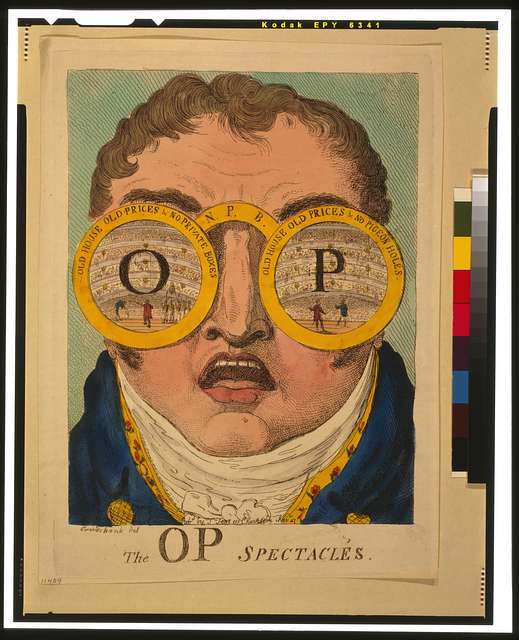
Source: picryl/cruikshank del

I’d been lucky enough to snag an 8:45 a. m. appointment, which was great considering the heat index was predicted to be around 105 F. I woke up that morning in my air-conditioned apartment, got up, got dressed, took the elevator downstairs, and walked into a wall of dankness. I felt like I was breathing is swamp water, but I figured the office building would have adequate AC and didn’t think much of it.

Until the ophthalmologist pulled the phoropter up to my face and began making adjustments. Suddenly there was fog. Lots of it. We’re talking horns were blaring in the background. And what proceeded after was the longest eye appointment I’ve ever had as I stopped very few seconds to back up, blow on the lens until it cleared, and lean back in – stop, rinse, repeat.

An hour after arriving, I walked back outside, and could tell we were quickly approaching the high heat index of the day. Not there yet, but enough to that I wasn’t in any hurry to go to Walmart or any other brick-and-mortar store to order new glasses.

From watching YouTube and seeing their ads on Facebook, I knew about Zenni, but hadn’t considered using them because I need progressive (bifocal) lenses and wasn’t sure they offered them. I decided to look into it later, but still hoped for a break in the weather to make it to Walmart, our go-to optical retailer for the past several years.

Four Guys

That is until I read the case study of Warby-Parker in Strategic Social Media by Mahoney and Tang.

In 2010, a group four undergrads at the Wharton School of Business decided they were tired of paying high prices for eyeglass, and worked to develop a new business model for the industry – one that “focused on online distribution rather than showrooms.”

But first they had to win over customers.

Even though the first social media site, SixDegrees.com, debuted back in 1997, followed by a social media site explosion in the early-to-mid 2000s that included the emergence of FaceBook, YouTube, Twitter and LinkedIn, many businesses were still strictly brick-and-mortar. This was certainly true for prescription eyeglass retailers.

So how’d they do it?

Traditional media wouldn’t have made sense for them for a few reasons:

  • an innovative online business model would need innovative media
  • a linear model of communication, which is usually part of traditional media, wouldn’t help to ease any cognitive dissonance their new model may produce

So they decided to use social media technology to create a more transactional communciation action plan by:

  1. Using technology to engage customers to provide a more personalized experience – Warby-Parker sought to ease their customer’s concerns about the inability to try on frames in-store, by developing “a Home Try-On campaign,” which allowed people to order five frames to try on at home with no cost. They’ve also since added virtual try-on capabilities to their app.
  2. Encouraging transactional communication – This was done by responding to comments on social media platforms and encouraging customers to post pictures of their home try-ons on their own social networks.
  3. Offering expert advice on eyeglasses – Customers were able to watch information videos on YouTube that were posted by both the company and fans.
  4. Marketing for social good – The company partnered with VisionSpring to give free eyeglasses to those who needed them for every one purchased by a consumer.

(L Meghan Mahoney & Tang Tang, (Writer On Social Media, 2017)

Hindsight Counts Too

Overall, this seemed like a great business plan, but it’s not a perfect one. Since 2013, the company has opened 250 stores around the U.S. and Canada, and two-thirds of its sales come from these stores (Editors, 2024) Not that opening stores is the sign of a failed business model. It give customers choice, which is always a good thing.

But I feel that I again need to point out that despite their online presence and number of showrooms, I’d never heard of them before reading my marketing textbook. This tells me they might need an updated marketing plan that implements new trends in the field, like maybe partnering with social media influencers.

Takeaways

Speaking as a consumer, I liked the virtual and home try-ons, but wasn’t crazy about the limits on how many frames I could try at once. It took a week to receive my first box, and now I will have to wait another week for a second to arrive. If I’d gone to a store, I would have had all of the frames available to me at once. As a content-creator, I liked that they encouraged posting pics of their try-ons, and would like to incorporate that into my own marketing plan somehow.

Which of these strategies might work best for you? If you’re a writer, how might you use some of these ideas to build your author platform?

Sources Cited

Editors, R. (2024, July 2). Warby Parker Brick-and-Mortar Store Expansion Update. Review of Optometric Business; Review of Optometric Business. https://reviewob.com/warby-parker-brick-and-mortar-store-expansion-update/

Hill, C. (2024, February 1). 11 Social Media Trends You Need to Know in 2024. Sprout Social. https://sproutsocial.com/insights/social-media-trends/

L Meghan Mahoney, & Tang Tang, (Writer On Social Media. (2017). Strategic social media : from marketing to social change. Wiley Blackwell.